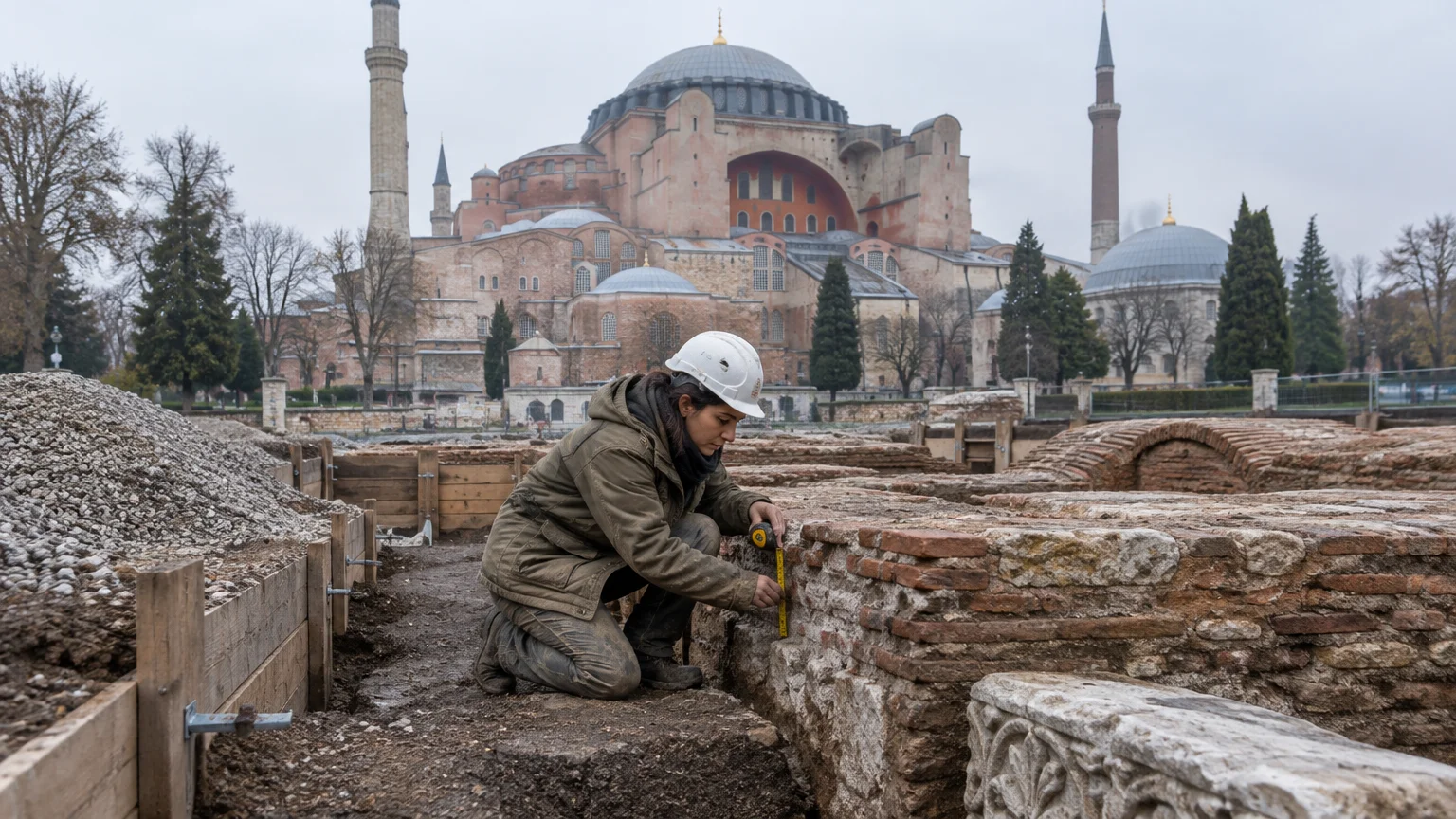
You can now look past the old legends and see what truly lies beneath Istanbul’s most famous monument. Recent digs and laser scans have mapped a hidden subterranean network beneath Hagia Sophia.
Crews cleared thousands of tons of mud to uncover stone tunnels, burial vaults, and water channels. These forgotten spaces kept the grand structure dry and stable for sixteen centuries.
Here is what researchers found under the stone floors, how cutting-edge tools mapped the dark, and what you can experience on your next visit to Istanbul.
In This Briefing09 Sections ▾
- 01Highlight #1: The Massive Mud Excavation in the Gardens
- 02Highlight #2: Tunnel 4 and the Ancient Roman Connection
- 03Highlight #3: The Pre-Justinian Roman Hypogeum
- 04Highlight #4: Advanced 3D Terrestrial Laser Scanning
- 05Highlight #5: Busting Istanbul’s Subterranean Myths
- 06Highlight #6: Structural Reinforcement for Historic Vaults
- 07Highlight #7: The Upper Gallery Sightseeing Route
- 08Keep the Momentum: How to Plan Your Own Adventure
- 09Frequently Asked Questions
Highlight #1: The Massive Mud Excavation in the Gardens
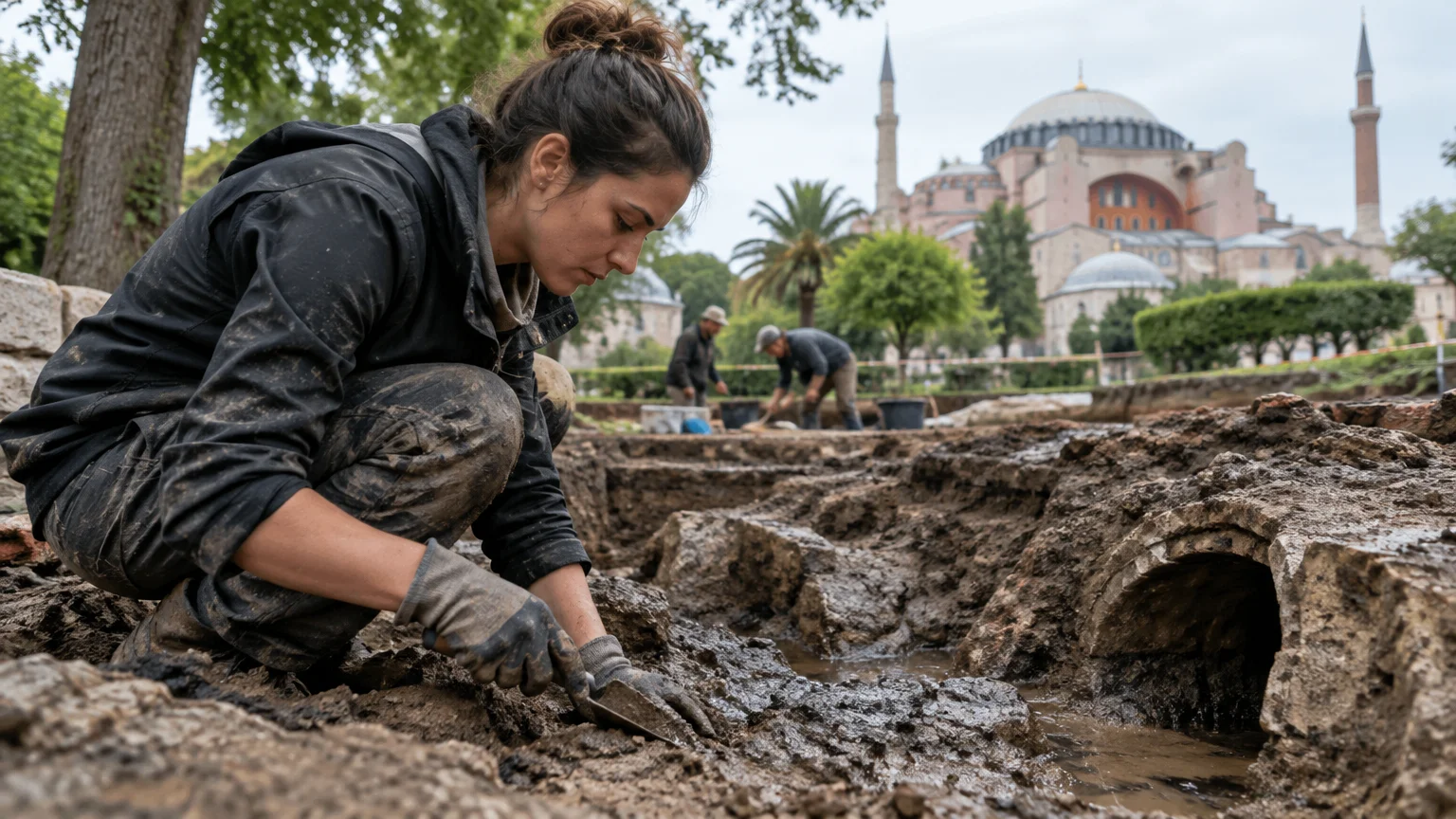
Turkish heritage teams cleared nearly 3,000 metric tons of mud and backfill from the site. This effort uncovered 420 meters of stone passages across nine tunnels and six chambers.
Culture and Tourism Minister Mehmet Nuri Ersoy announced these findings in late 2026. The major work centered on the Western Garden and the nearby Vizier’s Garden.
- Debris removed: Nearly 3,000 metric tons of earth and backfill.
- Total distance cleared: 420 meters of stone passages.
- Mapped spaces: Nine distinct tunnels and six underground chambers.
Highlight #2: Tunnel 4 and the Ancient Roman Connection
The longest cleared corridor is known as Tunnel 4. It stretches 180 meters along the entrance facade from the Fatih Madrasa toward the visitor entrance.
This passage features a gentle three percent slope to move water away from the walls. Archaeologists believe it once linked directly to an ancient Roman road.
- Length: 180 meters running near the visitor entrance.
- Engineering design: A three percent gradient built to drain rainwater.
- Historical link: Direct path toward the historic Roman road network.
Highlight #3: The Pre-Justinian Roman Hypogeum
Excavators in the Vizier’s Garden dug five feet beneath the mud floor. There, they uncovered a stone burial chamber known as a hypogeum.
The main room measures about eight meters on each side. Its construction dates to the fourth century, making it older than the current basilica built in 537 CE.
- Chamber size: Roughly eight by eight meters of ancient masonry.
- Age: Built in the fourth century or earlier.
- Key feature: A 25-meter stone channel heading east into bedrock.
Highlight #4: Advanced 3D Terrestrial Laser Scanning
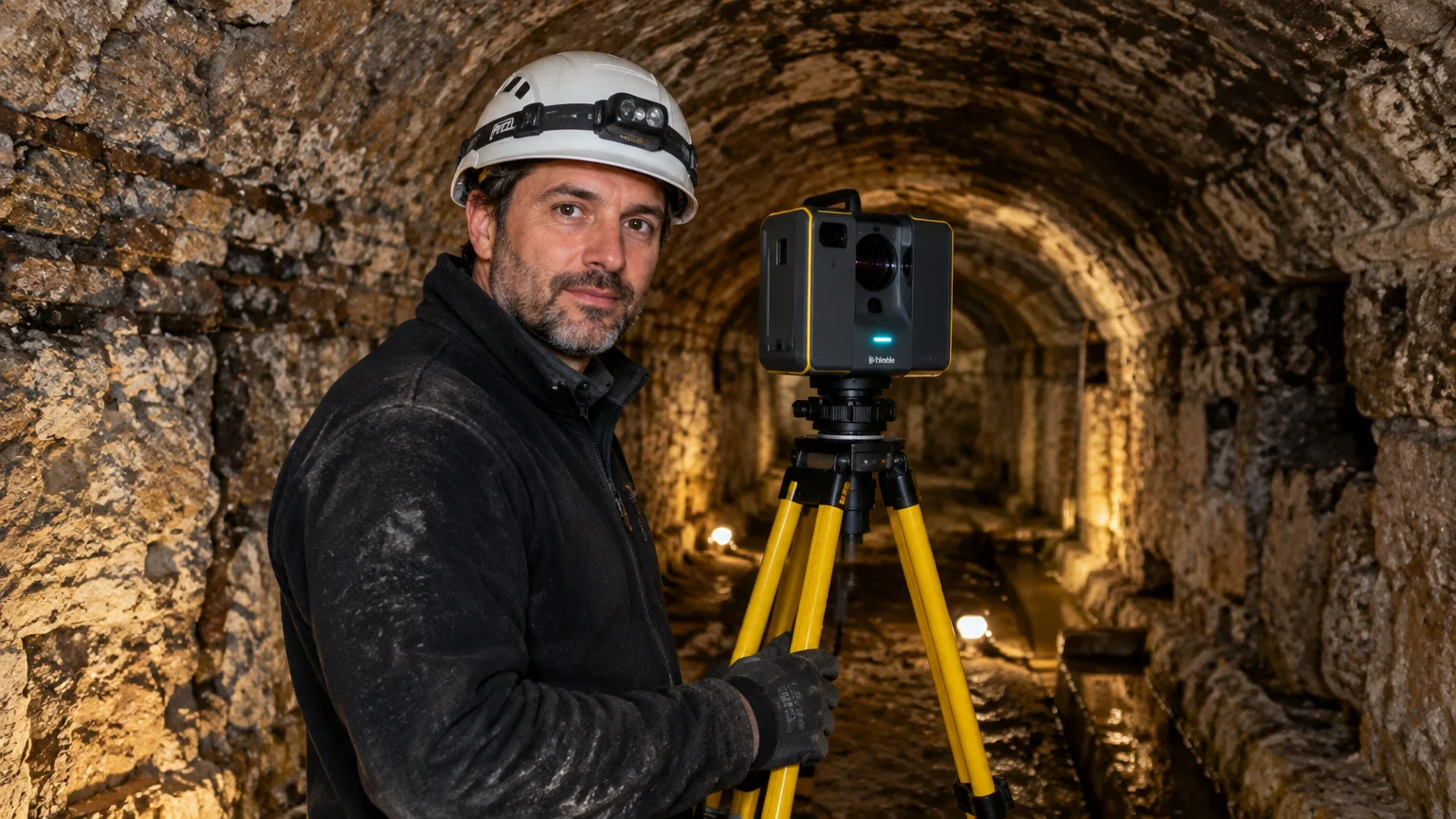
Archaeologists did not rely on hand tools alone. Professor Hasan Fırat Diker led scanning teams into the tight, dark spaces.
The crew used terrestrial laser scans and radar across 5,200 square meters. These digital tools created exact point-cloud models without damaging the ancient masonry.
- Technology: High-resolution terrestrial laser scanning and radar.
- Initial survey: 900 meters of culverts and wells mapped in 2020.
- Recent milestone: Full 3D documentation published in March 2026.
Highlight #5: Busting Istanbul’s Subterranean Myths
Local legends long claimed that secret tunnels connected Hagia Sophia to the Sea of Marmara. Others claimed royal escape routes ran to distant islands.
The laser surveys revealed a much more practical story. The network functioned as an ingenious drainage and ventilation system to keep the monument dry.
- Network purpose: Rainwater runoff, sub-floor airflow, and water storage.
- Network scale: Up to nine kilometers of regional channels, many collapsed.
- Confirmed reality: No secret escapes to the sea or nearby islands.
Highlight #6: Structural Reinforcement for Historic Vaults
Centuries of moisture and ground movement damaged several underground vaults. Teams repaired an 18-meter damaged section inside a larger 56-meter vaulted hall.
Workers installed stainless steel supports to protect the tunnels from future earthquakes. This work ensures the ground remains safe while crews restore the main dome above.
- Vault repair: An 18-meter damaged section restored inside a large hall.
- Modern materials: Stainless steel beams installed for seismic support.
- Safety goal: Structural stability before any future public access.
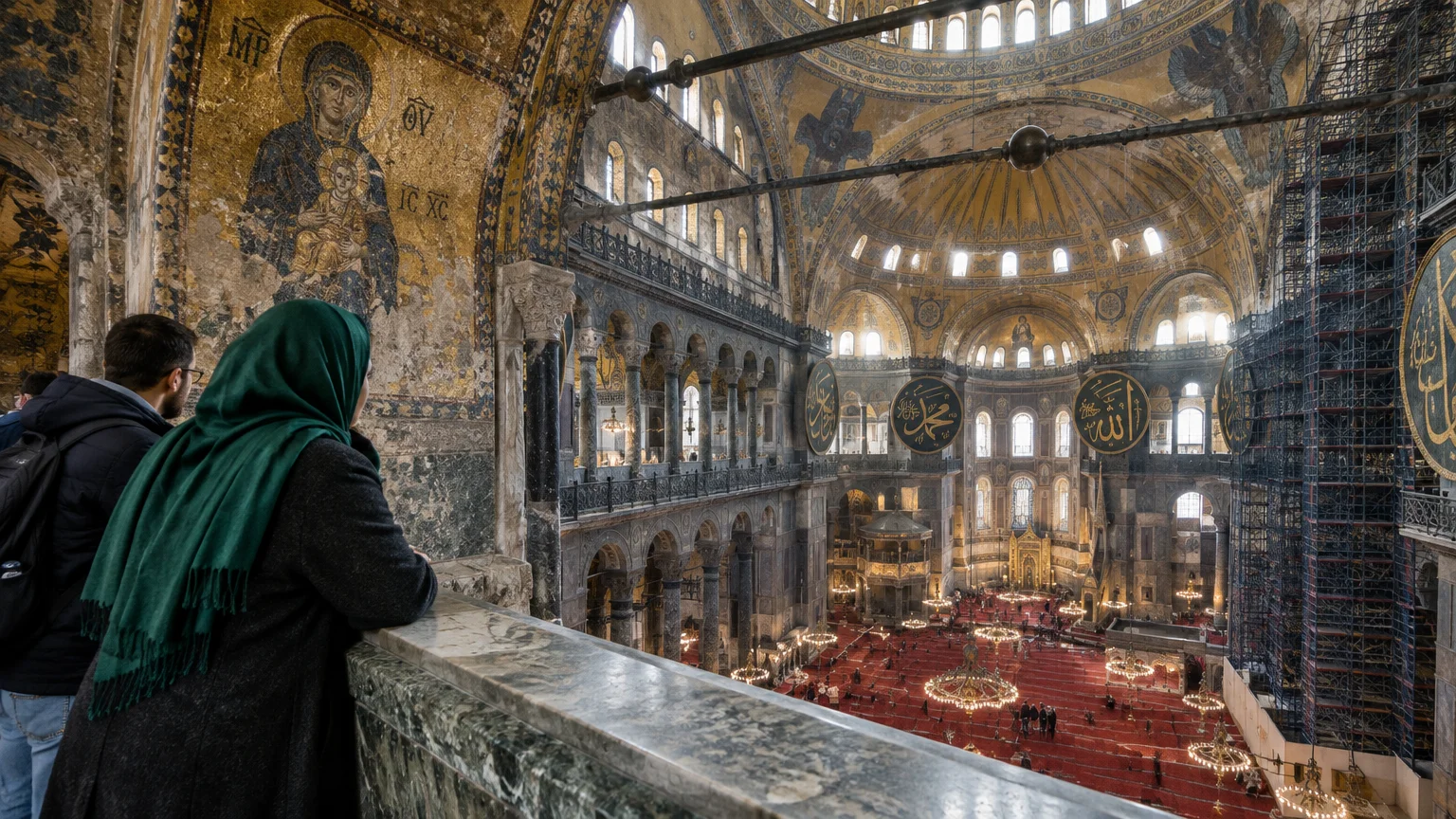
Highlight #7: The Upper Gallery Sightseeing Route
The subterranean tunnels remain closed to tourists while stabilization work continues. However, you can still experience the monument through the dedicated upper gallery route.
You can admire famous Byzantine mosaics like the Deësis and look down into the nave. You will also see the massive steel platform used for ongoing dome repairs.
- Visitor access: Upper gallery open daily for international tourists.
- Top highlights: Ninth-century Byzantine mosaics and sweeping prayer hall views.
- Active work: Glimpses of the 43.5-meter steel dome platform.
Keep the Momentum: How to Plan Your Own Adventure
Planning your trip to Sultanahmet takes a little preparation. Foreign tourists pay 25 euros to enter the upper gallery through a separate south ramp.
Remember that Hagia Sophia is an active mosque. You must dress modestly by covering your shoulders and knees, and women must cover their hair.
Keep local transit rules in mind when you head to the site. Sultanahmet expanded its car-free zone, so your taxi must drop you outside the pedestrian perimeter.
- Standard ticket: 25 euros for international visitors (children under eight enter free).
- Opening hours: Opens at 09:00 in winter and 08:00 in summer.
- Dress code: Covered shoulders and knees; hair coverings required for women.
- Arrival tip: Drop off outside the pedestrian zone due to local traffic rules.
Frequently Asked Questions
Can tourists visit the underground tunnels today?
No. All underground passages are closed to the public while conservation teams finish structural repairs and install safety systems.
How much does it cost to visit Hagia Sophia?
Foreign visitors pay 25 euros for the upper gallery route. Turkish citizens pay 500 TL, or 250 TL with a MüzeKart.
Are the tunnels connected to the Basilica Cistern?
No. Modern surveys found no physical link between the tunnels and the Basilica Cistern. The system served Hagia Sophia alone.
When will the dome restoration finish?
Crews began comprehensive earthquake restoration in 2025. Officials expect major work on the dome and eastern semi-dome to conclude in 2027.
Verify travel advisories and guidelines through the European Union travel portal. For cultural research, consult institutions like Lonely Planet and National Geographic.
Disclaimer: Information can change quickly. Confirm opening times, pricing, and safety advisories with official sources before booking or travelling.