You can trace the pulse of human ambition through the staggering masterpieces we have carelessly misplaced over the centuries. Chasing a legendary lost treasure turns a standard museum visit into a thrilling investigation of history mysteries that still baffle the brightest academic minds. From stolen Renaissance panels to vanished royal hoards, these missing artifacts represent the ultimate unsolved cases of the cultural world. Following the trail of these elusive objects offers a brilliant framework for your next itinerary, leading you straight into the archives and active excavation sites of prestigious institutions. You will discover that spaces defined by absence often hold the most compelling stories, challenging you to look closer at the clues left behind.
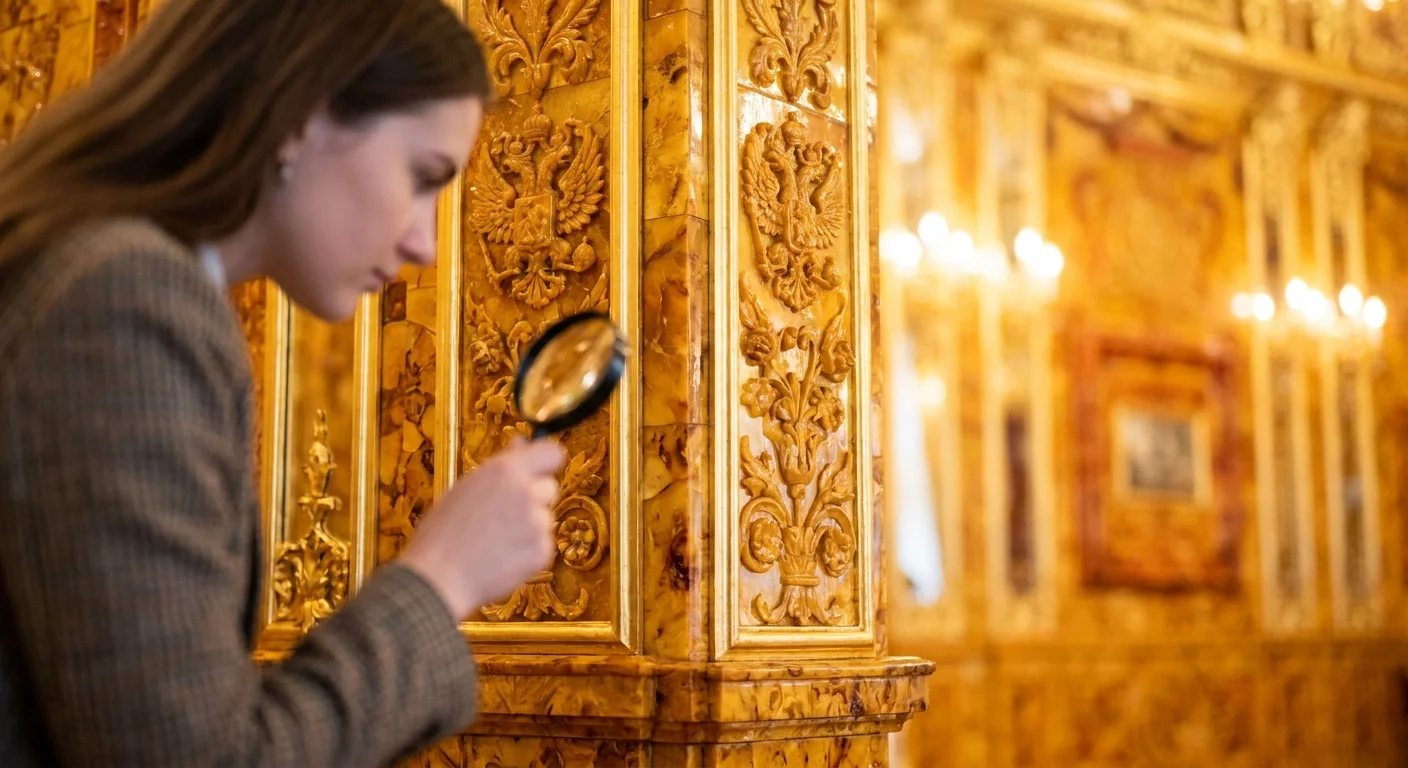
Cultural Highlight #1: The Amber Room’s Missing Panels
Crafted from six tons of fossilized resin, the original Amber Room vanished during the chaos of 1941. German forces dismantled the golden chamber at the Catherine Palace near St. Petersburg, packing the panels into crates bound for Königsberg. The trail goes cold shortly after the Allied bombings of 1944. Today, experts debate whether the panels burned in the castle fire or lie hidden in a collapsed subterranean bunker.
You can experience the sheer scale of this loss by visiting the masterfully reconstructed Amber Room at the Tsarskoye Selo state museum reserve. Russian craftsmen spent nearly twenty-five years decoding historic photographs to carve the replica you see today. The glowing walls serve as a masterclass in restorative architecture.
Booking an early access ticket allows you to admire the glowing amber without the dense afternoon crowds. Keep an eye on ongoing archaeology discoveries in the Baltic region; amateur sleuths and professional excavation teams regularly launch new digs hoping to unearth the original crates.
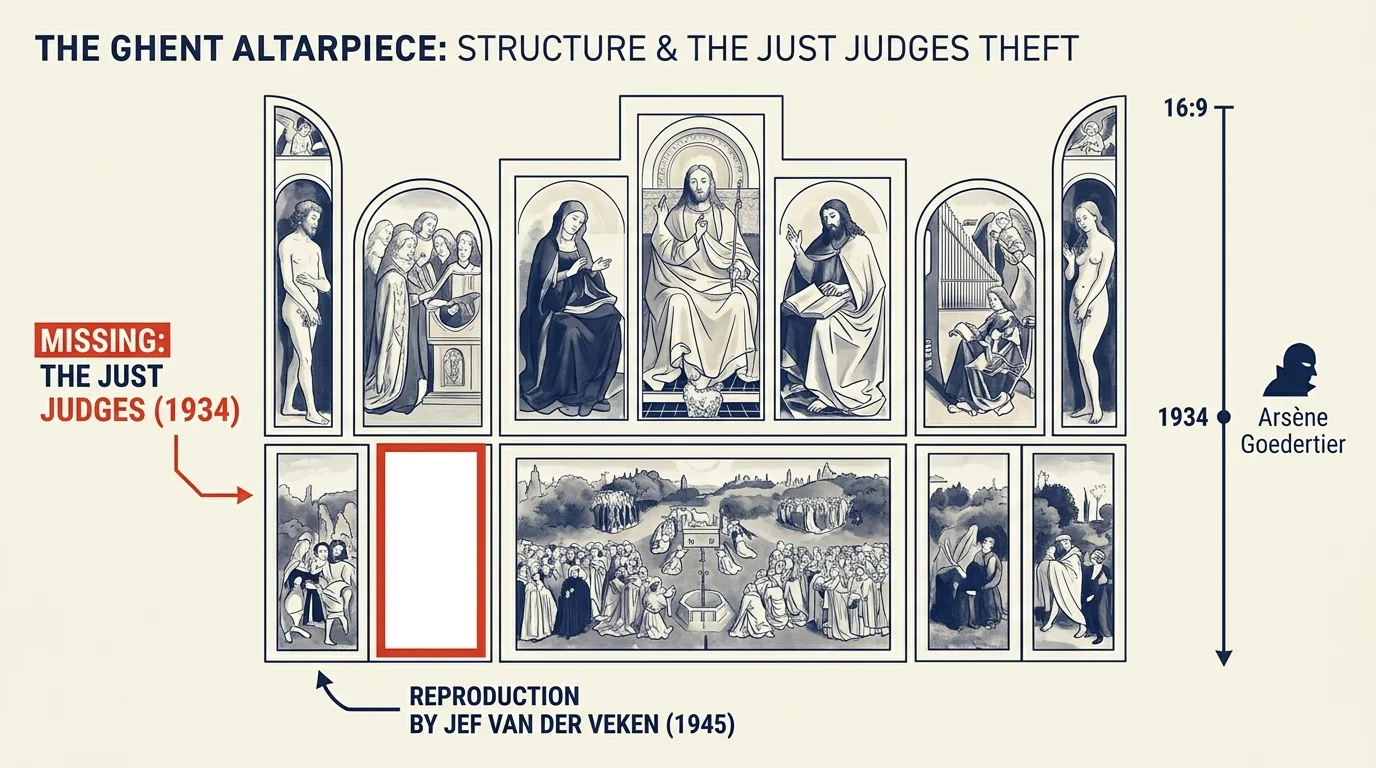
Cultural Highlight #2: The Just Judges Panel of the Ghent Altarpiece
On a quiet night in 1934, thieves removed two panels from the spectacular Ghent Altarpiece at St. Bavo’s Cathedral in Belgium. While authorities quickly recovered the painting of Saint John the Baptist, the panel depicting the Just Judges remains entirely unaccounted for. The prime suspect, Arsène Goedertier, suffered a fatal stroke just months after the theft, taking the secret location to his grave.
Visiting St. Bavo’s Cathedral today offers a profound lesson in art resilience. Curators have placed a beautiful 1945 reproduction by Jef Van der Veken in the empty space, ensuring Jan van Eyck’s polyptych retains its breathtaking visual harmony.
You should book tickets to the cathedral’s modern visitor center, where augmented reality headsets guide you through the turbulent history of the altarpiece. Walking through the crypts and viewing the restored panels up close highlights why this specific missing masterpiece remains Belgium’s most captivating unsolved crime.

Cultural Highlight #3: King John’s Sunken Crown Jewels
King John of England notoriously lost his entire baggage train—including the royal crown jewels—while crossing the tidal estuary known as The Wash in 1216. Rushing to evade rebellious barons, his wagons sank into the treacherous quicksands of Lincolnshire. The shifting coastal tides swallowed ceremonial swords, gold coins, and silver goblets.
Tracing this route offers a fantastic opportunity for an off-the-beaten-path cultural excursion in Eastern England. You can visit the Lynn Museum in King’s Lynn to understand the medieval topography of the region and view everyday artifacts recovered from the era.
Local guides frequently lead specialized walking tours along the Sutton Bridge marshlands. Ensure you wear sturdy footwear and stick to marked paths; the coastal mudflats remain just as unpredictable today as they were eight centuries ago.
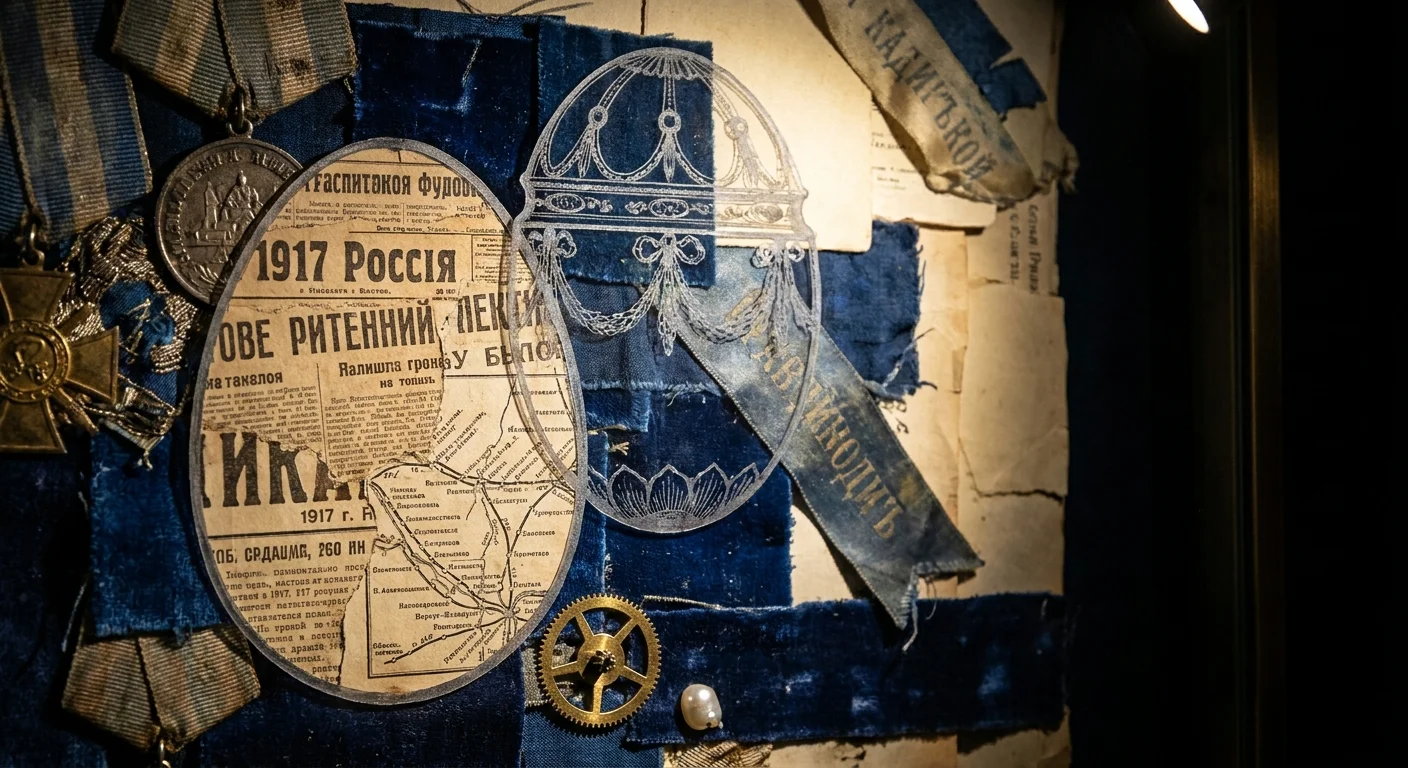
Cultural Highlight #4: The Vanished Imperial Fabergé Eggs
The House of Fabergé crafted fifty lavish imperial Easter eggs for the Romanov family before the Russian Revolution upended the empire in 1917. When the Bolsheviks seized the royal palaces, they packed the jewel-encrusted creations into the Kremlin Armory. Authorities sold many to western buyers to fund the new government, but eight of these masterpieces simply disappeared.
The breathtaking discovery of the Third Imperial Egg in 2012—found by an American scrap metal dealer who almost melted it down—proves this hidden treasure could surface anywhere. You can dive deep into the intricate craftsmanship of these objects at the Fabergé Museum in St. Petersburg or by catching traveling exhibitions at institutions like London’s Victoria and Albert Museum.
When viewing the surviving eggs, pay attention to the mechanical surprises hidden inside each piece. Understanding the complex engineering helps you appreciate why art historians refuse to give up the search for the missing eight.
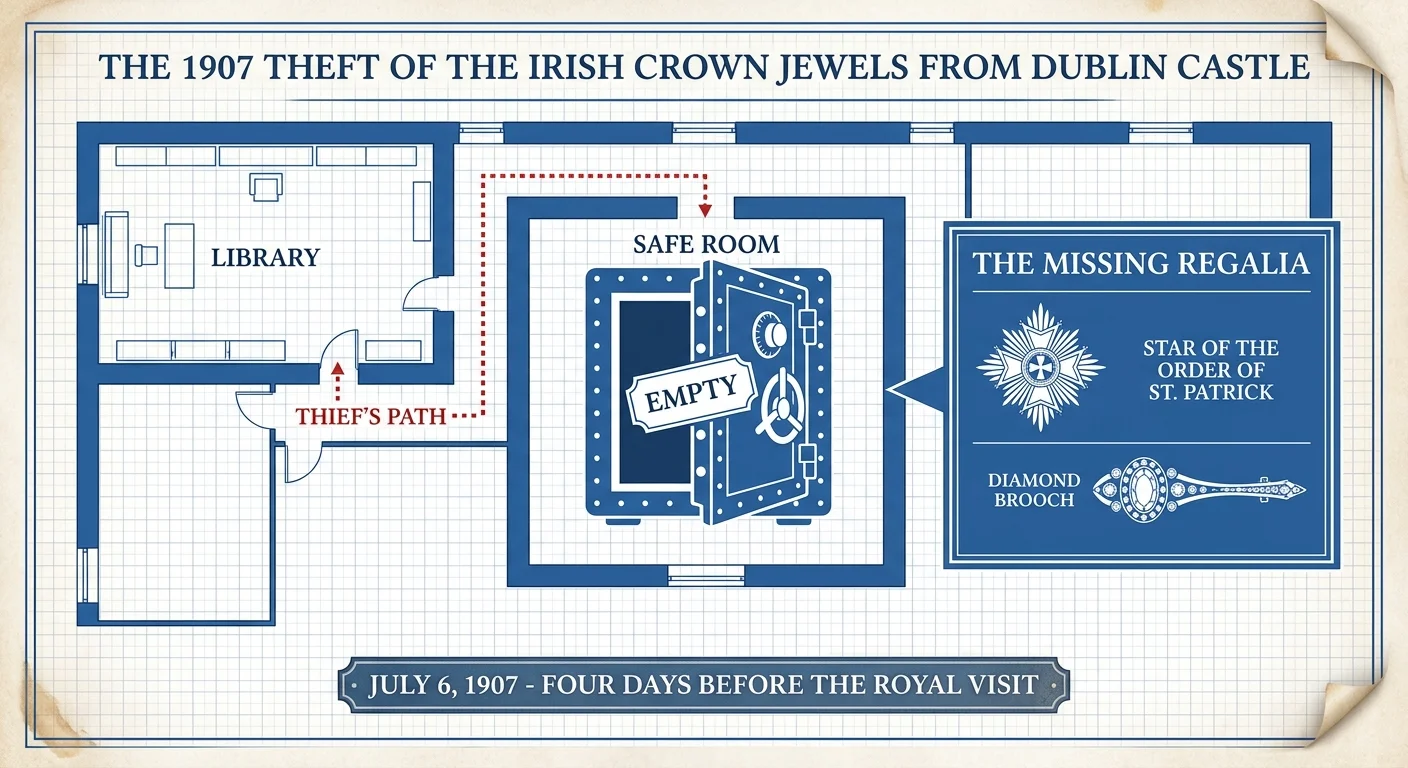
Cultural Highlight #5: The Stolen Crown Jewels of Ireland
Stored inside a steel safe in Dublin Castle, the Crown Jewels of Ireland comprised a heavily jeweled star and badge of the Order of St. Patrick. In 1907, just days before a royal visit from King Edward VII, the castle guard discovered the safe wide open and the jewels gone. The inside job ruined the career of Arthur Vicars, the Ulster King of Arms, though historians strongly suspect one of his flamboyant assistants orchestrated the heist.
You can stand in the very spot where the theft occurred by booking a guided tour of the State Apartments at Dublin Castle. The guides excel at weaving the scandalous details of the Edwardian court into the broader narrative of Irish independence.
Combine your castle visit with a trip to the National Museum of Ireland on Kildare Street. Studying the intricate Celtic metalwork on display contextualizes the immense cultural and financial value of the stolen royal diamonds.
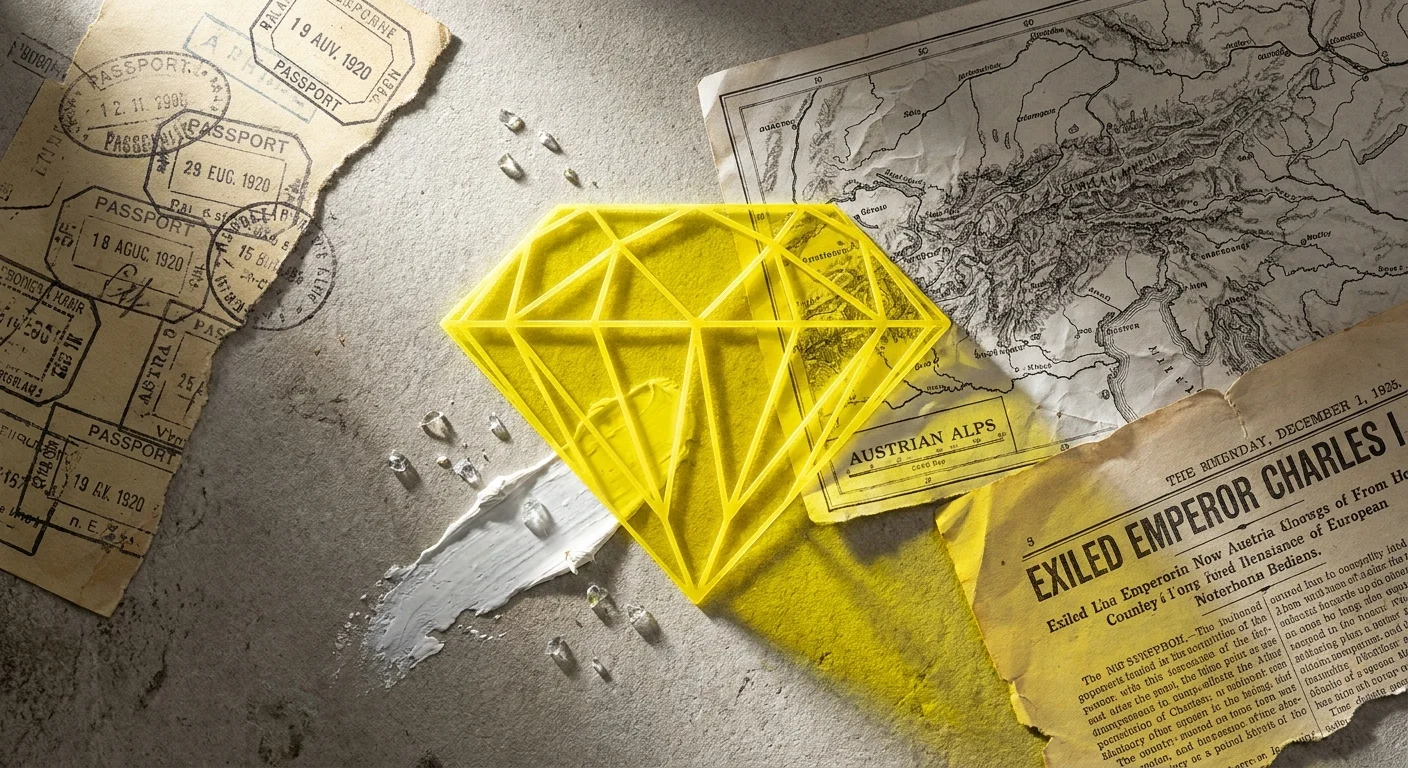
Cultural Highlight #6: The Florentine Diamond
Weighing in at a massive 137.27 carats, the Florentine Diamond changed hands from the Medici family to the Habsburg dynasty before dropping off the map. Following the collapse of the Austro-Hungarian Empire in 1918, Emperor Charles I took the yellow, nine-sided diamond into exile in Switzerland. He entrusted the stone to an unscrupulous lawyer who allegedly sold it and vanished.
To understand the grandeur of the Habsburg collection, secure a ticket to the Imperial Treasury at the Hofburg Palace in Vienna. Walking among the surviving crowns, scepters, and glittering robes provides a vivid picture of the wealth that once defined Central Europe.
Gemologists theorize that thieves recut the Florentine Diamond into smaller stones to easily fence them on the black market. As you examine the flawless diamonds remaining in the Vienna treasury, you quickly realize how easily a historic gem can lose its identity under a jeweler’s wheel.

Cultural Highlight #7: The Second Temple Menorah
When Roman legions commanded by future Emperor Titus sacked Jerusalem in 70 AD, they looted the magnificent solid gold Menorah from the Second Temple. The conquerors proudly paraded the sacred object through the streets of Rome, a moment permanently immortalized in stone on the Arch of Titus. The trail vanishes after the Vandal sack of Rome in 455 AD, with theories suggesting the invaders melted it down or shipped it to Carthage.
You can trace the legacy of these ancient artifacts by walking the Via Sacra in the Roman Forum. Standing beneath the Arch of Titus provides a tangible connection to the exact moment this priceless object entered the European historical record.
After visiting the Forum, cross the Tiber to explore the Vatican Museums. While rumors suggesting the Vatican holds the Menorah in a secret vault remain entirely unproven, the museum’s extensive collection of Roman antiquities offers vital context regarding imperial spoils of war.
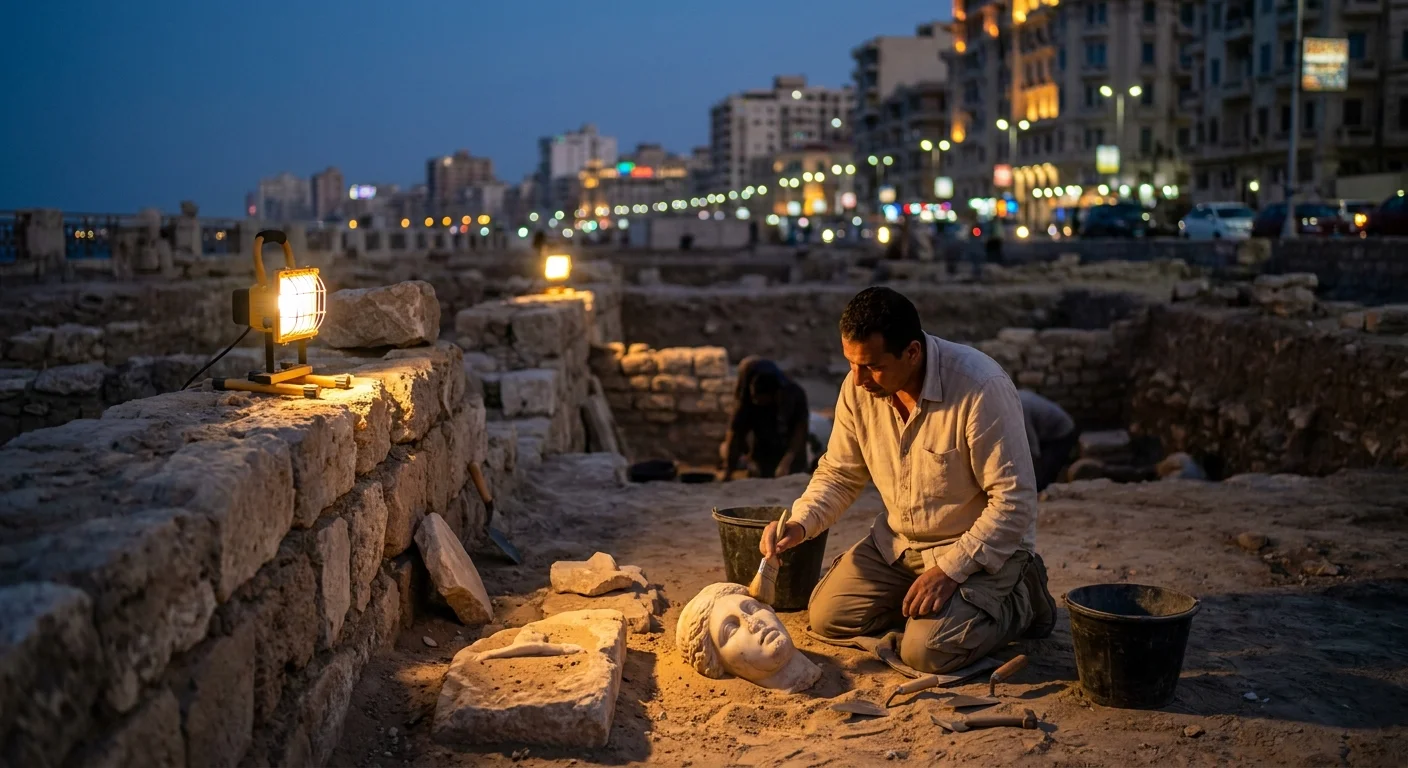
Cultural Highlight #8: The Tomb of Alexander the Great
The final resting place of Alexander the Great represents the holy grail of global archaeology. Following his death in Babylon in 323 BC, Ptolemy hijacked the funeral cart and diverted the body to Egypt. Ancient texts confirm the tomb sat in the heart of Alexandria, drawing high-profile tourists like Julius Caesar and Augustus. Centuries of earthquakes, rising sea levels, and urban development eventually erased the mausoleum from the map.
You can explore the fascinating overlapping cultures of Alexander’s era at the newly renovated Graeco-Roman Museum in Alexandria. The galleries showcase the exact Hellenistic and Egyptian aesthetic blending that would have decorated the legendary tomb.
If you prefer a European focal point, visit the Archaeological Museum of Pella in Northern Greece. Seeing the birthplace of the conqueror and examining the exquisite pebble mosaics prepares you to understand the monumental scale of his lost Egyptian sanctuary.

Keep the Momentum: Making the Most of Culture Trips
Booking a trip centered on history mysteries requires a strategic approach to maximize your time. High-profile institutions like the Hofburg Palace or the Vatican Museums sell out weeks in advance; you must secure your timed-entry tickets online before booking your flights. Plot your daily itineraries carefully so you avoid rushing through the profound silence of these grand archival spaces.
Respect the solemnity of active excavation spaces and historically significant locations. When exploring the marshlands of The Wash or the crypts beneath St. Bavo’s Cathedral, follow the designated paths to protect the environment and preserve fragile archaeological footprints. The thrill of discovery should never come at the expense of local heritage.
Support the local communities preserving these legends by hiring independent, credentialed tour guides. Local experts possess the archival knowledge and storytelling flair required to bring the absence of an artifact to life. They often provide access to smaller, secondary museums that house the crucial contextual clues major guidebooks overlook.
Frequently Asked Questions
Are tickets required to see the reproduced Amber Room?
Yes. You must purchase a specific ticket for the Catherine Palace at the Tsarskoye Selo reserve. Securing an advance online reservation prevents you from spending hours waiting in the courtyard line.
What is the best season to explore outdoor historical sites like The Wash?
Late spring and early autumn provide the best conditions for outdoor cultural excursions in Northern Europe. You avoid the freezing coastal winds of winter while dodging the peak summer tourist crowds.
Do European cultural institutions offer tours in English?
Major museums and historic palaces universally provide English-language audioguides, printed placards, and guided tours. However, downloading the institution’s official smartphone app before your visit guarantees you have access to translated materials regardless of crowd size.
How can I explore these historical mysteries on a tight budget?
Focus on public access spaces and municipal museums. Walking the Roman Forum to see the Arch of Titus or exploring the exterior architecture of Dublin Castle requires minimal expenditure. Many national museums in cities like London and Dublin also offer free general admission, allowing you to examine the contextual artifacts without breaking the bank.
- Book your museum tickets at least a month in advance.
- Pack comfortable, weather-appropriate footwear for outdoor site visits.
- Hire certified local guides to get the most accurate historical context.
Cross-check schedules and archives via institutions such as EuropeNow, Time Out, and national culture ministries like The British Museum.
Disclaimer: Programs and ticket policies shift quickly. Confirm schedules and availability directly with organisers before travelling.